
 Apple Podcasts

 Spotify

 RSS Feed

 Amazon Music

 Audible

 iHeartRadio

 YouTube

 Podcast Addict

 PlayerFM

 Deezer

 Pandora

 TuneIn

 Podchaser
Family Feud: When Love Becomes Murder

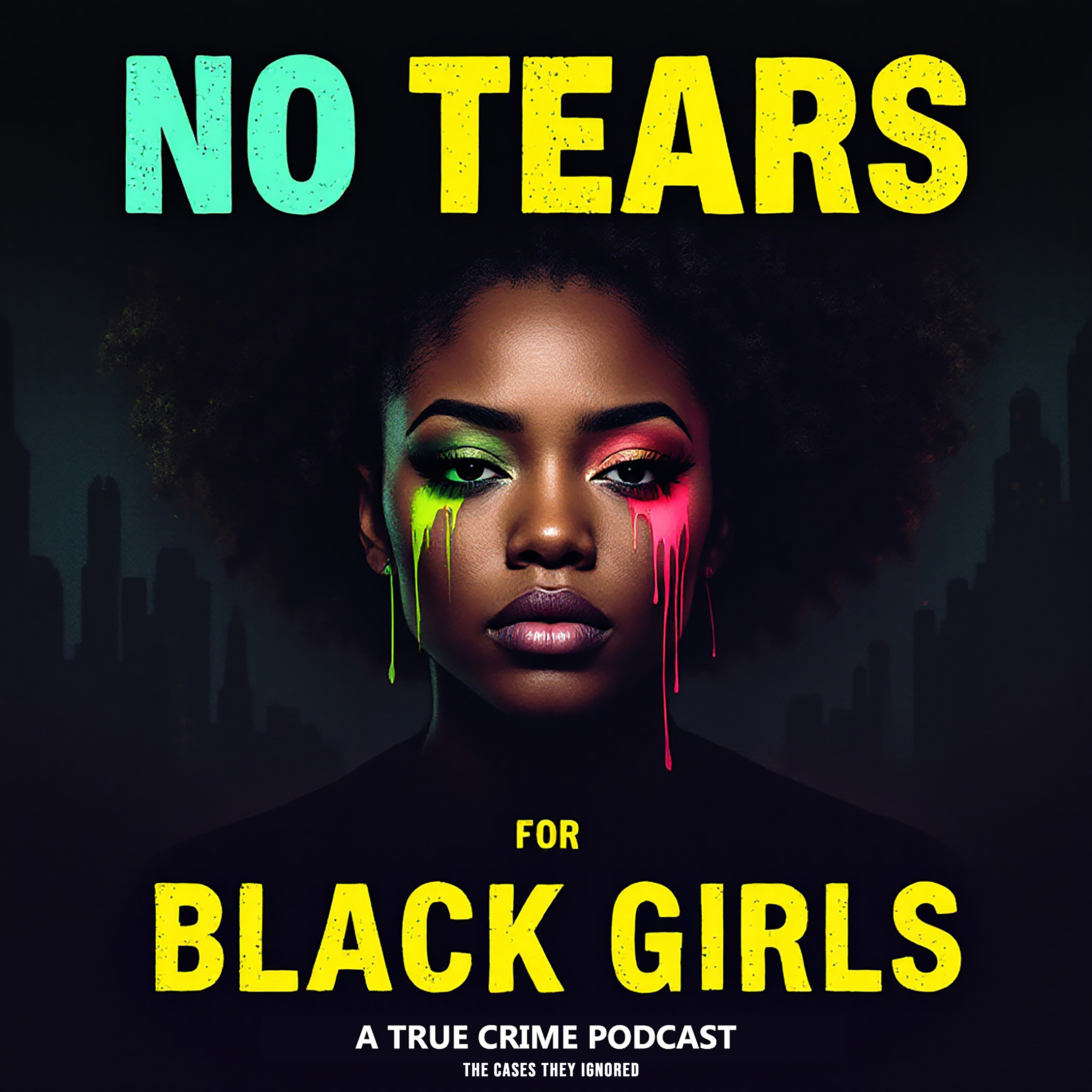
In this powerful episode of No Tears For Black Girls, we explore the chilling case of Rebecca "Becky" Bliefnick, whose appearance on Family Feud with her husband became tragically prophetic. When Becky jokingly told Steve Harvey that her biggest mistake was "saying yes to my husband," she had no idea those words would foreshadow her own murder just months later.
On February 23rd, 2023, Becky was found shot to death in her Quincy, Illinois home by her estranged husband Timothy Bliefnick - the same man who smiled on national television while claiming "I love my wife." We dive deep into the investigation that revealed Tim's calculated plan to stalk and murder the mother of his three children, and examine how the system failed to protect Becky despite her desperate pleas for help.
But this episode goes beyond one tragic case. We also tell the story of Korryn Gaines, a 23-year-old Black mother from Baltimore who was killed by police in 2016 while trying to protect herself from an abusive partner. Despite facing similar domestic violence and systemic failures, Korryn's story received a fraction of the media attention that Becky's case generated.
Through these parallel stories, we examine the stark disparity in how our society responds to violence against women - and ask the difficult question: whose tears matter most? Why do some victims become household names while others are forgotten?
Join host Samantha Paul as we demand justice for ALL women and challenge the media's selective empathy. Because every woman deserves to have her story told with dignity, compassion, and the demand for justice - regardless of the color of her skin.
Featured Music: "No Tears For Black Girls" by Datzhott & Jayda Truth
CREDITS:
Created, Written, & Produced by John Reedburg
Hosted & Narrated by Samantha Paul
Production Company: John Reedburg Media
SOCIAL MEDIA LINKS:
https://www.youtube.com/@NoTearsForBlacksGirls
facebook.com/notearsforblackgirls
instagram.com/notearsforblackgirls
tiktok.com/@notearsforblackgirls
0:03 No tears for black girls when they disappear, No tears for black girls like they were never here, but we remember will speak their names. On February 23rd, 2023, in the quiet town of Quincy, IL, a 911 call shattered the morning silence. A frantic voice reported gunshots at 616 Kentucky St. When police arrived at the modest two-story home, they found a scene that would haunt this small community forever. Rebecca Becky Bleifnik lay dead in her bathroom, struck by multiple gunshots.
0:50 The 41 year old mother of three had been living her worst nightmare, a contentious divorce that had turned increasingly bitter and dangerous. But this wasn't a random home invasion or burglary gone wrong. The evidence would reveal something far more sinister. Becky had been afraid. For months, she'd been telling friends and family that she feared for her life. Her estranged husband, Timothy Bleepnik, had been making threats. The divorce proceedings had become a battlefield, with custody of their three young sons hanging in the balance. Becky had even gone to court seeking an order of protection. But the system that was supposed to protect her had failed.
1:32 The night before her murder, Becky had been out with friends, trying to maintain some normalcy in her increasingly chaotic life. She returned home to her children, tucked them into bed and prepared for what she didn't know would be her final night alive. Sometime in the early morning hours, an intruder entered her home through a basement window. But this wasn't just any intruder. This person knew the house layout. They knew where to find Becky. They knew the children would be sleeping upstairs. The killer moved through the darkness with purpose, making their way to the bathroom where Becky would make her last stand. The investigation revealed chilling details.
2:14 The basement window had been carefully removed from the outside, not broken, but methodically taken apart by someone who had time and knowledge of the houses construction. Footprints in the snow LED investigators on a trail that would eventually point to 1 devastating conclusion. Timothy Bleifnik, the man who had once promised to love and protect Becky, had become her greatest threat. Phone records, surveillance footage and forensic evidence began painting a picture of a man who couldn't accept that his marriage was over, a man who would rather see his wife dead than see her free.
2:54 The most haunting detail? Just months before her murder, Becky had appeared on a game show called Family Feud alongside Tim. When host Steve Harvey asked what the biggest mistake in her life was, Becky had answered, laughing. Saying yes to my husband when he asked me to marry him. The audience laughed. Tim smiled. But those words would prove to be tragically prophetic. What makes this moment even more chilling is what Tim said during that same appearance. When Steve Harvey asked the men what they thought their wives biggest mistake was, Tim responded with an eerie calmness. Not my mistake.
3:34 I love my wife. But behind that smile was a man who would later stalk, terrorize and ultimately murder the woman he claimed to love. The couple had met at Quincy University, where Tim was a star football player and well known local salesman. They seemed like the perfect couple, successful, attractive, with three beautiful sons. But beneath the surface, their marriage was crumbling under the weight of Tim's controlling behavior and Becky's growing independence. As investigators dug deeper, they uncovered a pattern of escalating threats and controlling behavior. Tim had been monitoring Becky's movements, showing up at her workplace and making her life a living hell. Friends and family members came forward with stories of his increasingly erratic behavior and his obsession with maintaining control over Becky's life. The forensic evidence was overwhelming. Tim had planned this murder with cold calculation. He had stalked his wife for weeks, learning her routines, studying her home.
4:42 On the night of February 22nd, he rode his bicycle to her house. Undercover of darkness, security cameras captured A shadowy figure on a bike riding toward Becky's home just before the murder, and away from it just after. At 1:11 in the morning on February 23rd, Becky tried to call 911. She managed to dial 91126 before the phone was knocked from her hand. She had run to her bathroom, the only room with a lock, but it wasn't enough to save her. Tim kicked in the door and shot her 14 times with a 9mm handgun. None of the wounds were immediately fatal. Becky lay dying on her bathroom floor for several minutes, alone and in agony. The evidence was overwhelming.
5:28 Tim Bleepnick was arrested and charged with his wife's murder. During the trial, prosecutors painted a picture of a man consumed by rage and entitlement. They showed how Tim had planned this murder, how he had stalked his wife, and how he had executed his plan with cold calculation. The jury heard testimony about Becky's fear, her attempts to protect herself and her children, and the system's failure to keep her safe. In the end, justice was served. Timothy Bleifnik was convicted of first degree murder and sentenced to life in prison without the possibility of parole. His appeal was denied in November 2024, ensuring he will spend the rest of his life behind bars.
6:15 But for Becky's three young sons, justice could never bring back their mother or erase the trauma of losing both parents in one horrific act of violence. Now let me tell you about another case, one that received far less attention despite being equally tragic. Her name was Corin Gaines, a 23 year old black woman and mother of two from Baltimore, MD. On August 1st, 2016, Corin was shot and killed by police during a standoff at her apartment. But unlike Becky Bleepnik's case, which dominated national headlines for months, Corin's story was largely ignored by mainstream media.
6:56 Corin had been living in fear too, not just of police, but of her abusive boyfriend, 39 year old Kareem Courtney. Police reports show that Courtney had stalked, choked and slapped Corin and possibly struck her with a chair just one month before her death. Like Becky, Corin had tried to work with the system, cooperating with police to get a warrant for Courtney's arrest. But when police came to serve that warrant, they found Corin armed with a shotgun, terrified and convinced they were there to kill her. The standoff lasted 6 hours. Corin live streamed parts of it on Facebook, showing her five year old son asking what the police were trying to do. They trying to kill us?
7:43 The child replied when his mother asked. Unlike Becky's case, where the victim was portrayed as an innocent nurse and devoted mother, Corin was immediately labeled as a dangerous criminal who brought her death upon herself. But here's what the media didn't tell you about Corin Gaines. She had suffered severe lead poisoning as a child, just like Freddie Gray, another Baltimore victim of police violence. The lead poisoning had caused permanent brain damage, affecting her impulse control and ability to assess threats. She had grown up in the same over policed, underserved neighborhoods of West Baltimore where calling police for help often meant becoming a victim yourself. Corin couldn't find safety anywhere. She was harassed by police while driving in her own home. She experienced abuse at the hands of her daughter's father. When she tried to protect herself by cooperating with police against her abuser, those same police ended up killing her.
8:41 Her five year old son was shot in the crossfire, suffering injuries to his arm and face. The contrast in media coverage is stark and telling. Becky Bleifnik's story was covered by every major news outlet. Her case was featured on 48 Hours, Dateline, and countless true crime podcasts. The Family Feud angle made it irresistible to media outlets. A perfect tragic story of domestic violence with a compelling hook. Corin Gaines, meanwhile, was the 9th Black woman killed by police in 2016. But hers was the only case that received any significant national coverage at all.
9:22 And even then, the coverage focused on whether she deserved to die, whether she was a good victim worthy of sympathy. The media questioned her parenting, her mental state, her decision to arm herself. They didn't ask why a young mother felt so unsafe that she believed she needed a gun to protect herself and her children. This disparity in coverage reflects A broader pattern in how our society values different victims. When a white woman like Becky Bleifnik is murdered, she becomes a symbol of innocence destroyed. Her story is told with empathy and nuance. We hear about her dreams, her struggles, her attempts to escape an abusive situation. We understand that the system failed her. When a Black woman like Corin Gaines is killed, the narrative immediately shifts to what she did wrong. Did she comply with police orders? Was she a good mother?
10:21 Did she bring this on herself? The same empathy and understanding extended to white victims is rarely offered to Black women. Both women were failed by systems that were supposed to protect them. Becky's restraining order was denied. Corin's calls for help against her abuser led to the very confrontation that killed her. Both women were mothers trying to protect their children. Both women died because the men in their lives, whether an abusive husband or an abusive boyfriend, created situations that put them in mortal danger. Yet only one of these stories captured the nation's attention.
11:01 Only one of these women was seen as a perfect victim, deserving of our tears and outrage. This is the reality that Black women face every day. Their pain is minimized. Their deaths are justified. Their stories are ignored. The statistics are staggering. Black women are killed by intimate partners at rates significantly higher than white women, yet their cases rarely make national news. When Black women go missing, there are no wall to wall cable news coverage, no viral social media campaigns, no celebrity advocates. Their families have to fight just to get local news coverage, let alone national attention.
11:44 This isn't just about media coverage. It's about how our society values Black women's lives. When we don't tell their stories, when we don't demand justice for their deaths, when we don't see them as worthy victims, we send a message that their lives don't matter as much as others. Becky Bleefnick's story is important. Her death was a tragedy that should never have happened. Timothy Bleepnick deserved to spend the rest of his life in prison for what he did to the mother of his children. But Corin Gaines's story is equally important. Her death was equally tragic. The system failed her just as completely as it failed Becky.
12:24 The difference is that Becky's story fits our comfortable narrative about domestic violence. A good woman victimized by an evil man. Corin's story forces us to confront uncomfortable truths about racism, police violence, and the intersection of domestic abuse and state violence. It's easier to ignore her story than to grapple with these complex realities. But we cannot continue to ignore the Corin Gaines of the world while mourning only the Becky Bleefniks. Every woman deserves to have her story told with dignity and compassion. Every mother deserves to be seen as more than the circumstances of her death.
13:04 Every victim deserves justice, regardless of the color of her skin. Until we can extend the same empathy to all victims, until we can see Black women as worthy of our tears and our outrage, we will continue to fail the very people who need our protection the most. The question isn't whether these women were perfect victims. The question is whether we're willing to fight for justice for all women, not just the ones whose stories make us comfortable. Both Becky Bleifnik and Corin Gaines deserved better. They deserved to live. They deserved protection. They deserved justice. And they both deserved to be remembered not just as victims, but as human beings whose lives had value, whose deaths diminished us all, and whose stories demand that we do better. Coming up next, we have the full preview of No Tears for Black Girls by Jada Truth on Dots Hot Records. Thank you for listening to No Tears for Black Girls. If you enjoyed our show, please be sure to leave a five star rating and positive review to help spread the word about our podcast.
14:15 Stay loved, stay blessed and stay safe. This is Samantha Paul. It's a proven fact that every person in the world comes from a black woman, but we're still the most disrespected. We hold it down in public and fight storms in private. This one's for the missing, the silenced, and the sisters and sons we still speaking for We here count the names, hold the line.
15:08 We don't fold. We design no tears for black girls. We turn prayers in advance. Make up in a purse not for glam but for bruises. He said love. Then he swung. Then he circumcuses. Called three times file papers. They barely enforced. He was out by the weekend. Came back like a four sack of Pryor on a jacket from a year. She hit his gun. So they took the charge for his case. Thought the time he won.
15:49 He turned his back that night. Fear snapped like a wire broke, broke in a moment from a decade on fire. Courtroom fell. Art judge reading a life they said premeditated, not survival or strife. They don't, Sir. We saw a headline, not the year she endured. They gave a life in the cell, said the past. Made sure I held my breath in the closet, counting seconds like prayers. If I make it to the morning, maybe somebody cares. Protect black women. We don't celebrate death. We indict the neglect back When safety is a myth, then the cycle collects truth. We keep proceeds, count the names, hold the line, hold the line. We don't fall, we design. We got you flyer on the pole kept peeling in the rain on at the vigil, repeating the same name, say headline, scroll past low clicks, no spin till the body was discovered with details they won't print.
16:51 Silence. Whispers in the barbershop, rumors in the thread, all the shadows in the value placed upon the deck. We don't spread what we can't prove, but we name what we can. Facts only. There's a pattern in the silence when it's one of our fans last seen. Late night rideshare, never pink on cakes. Worker on vacation, phone never rings. We archive every day, We post every map I can pressure on the desk to like, fill every tap, push back. I kept calling her number, let it ring to the end, call it, save the voice on my phone, play the back like a hymn. Remember, say her name if the story gets told only after she's gone so late. We failed during daylight. So we write her a song. We write from Rihanna to Sandra, from near the core. Every name is a dot, every lock. Because within family build tables, not walls. Createspace, not divide.
17:35 When the system fails us, we become the guy. Yeah, late. Run to the store for milk and little diapers. Phone on 3%, wallet by the wipers. Trip lights in the rearview, hands on the wheel, no license registration. Breathing steady the hill. Call this Mama like I'm cool. Be home in a SEC. That's why. Audio cut short, then the dash cams. Check evidence. They said he breached wrong, she said that ain't him. Lies. He moved like a father would have liked a temple. He stood in the robe talking soft to the press, didn't he? Clutching on a receipt like a cross on the chest. Proof no chief at the podium just forms in a frame.
18:17 You rock a statement in the inbox. No one taking the blame, Howard. He kissed his baby's forehead. Whisper be right back. I still hear the door clicked in the world turn black on. Remember, remember, we don't traffic and rage. We demand what it's due policy and charges. When the facts prove true accountability. We want the true. We carry what they drop, we repair what they break. If they won't build the bridge, we become Hispanic. Take every prayer blooper and every tear builds the foundation. We don't just survive the storm, we become the transformation transform. We rise. We build. Count the names. Hold the line, hold the line. We don't fold. We design no tears for black girls. We turn praise into plants.
19:02 Turn them on. Say your name.