
 Apple Podcasts

 Spotify

 RSS Feed

 Amazon Music

 Audible

 iHeartRadio

 YouTube

 Podcast Addict

 PlayerFM

 Deezer

 Pandora

 TuneIn

 Podchaser
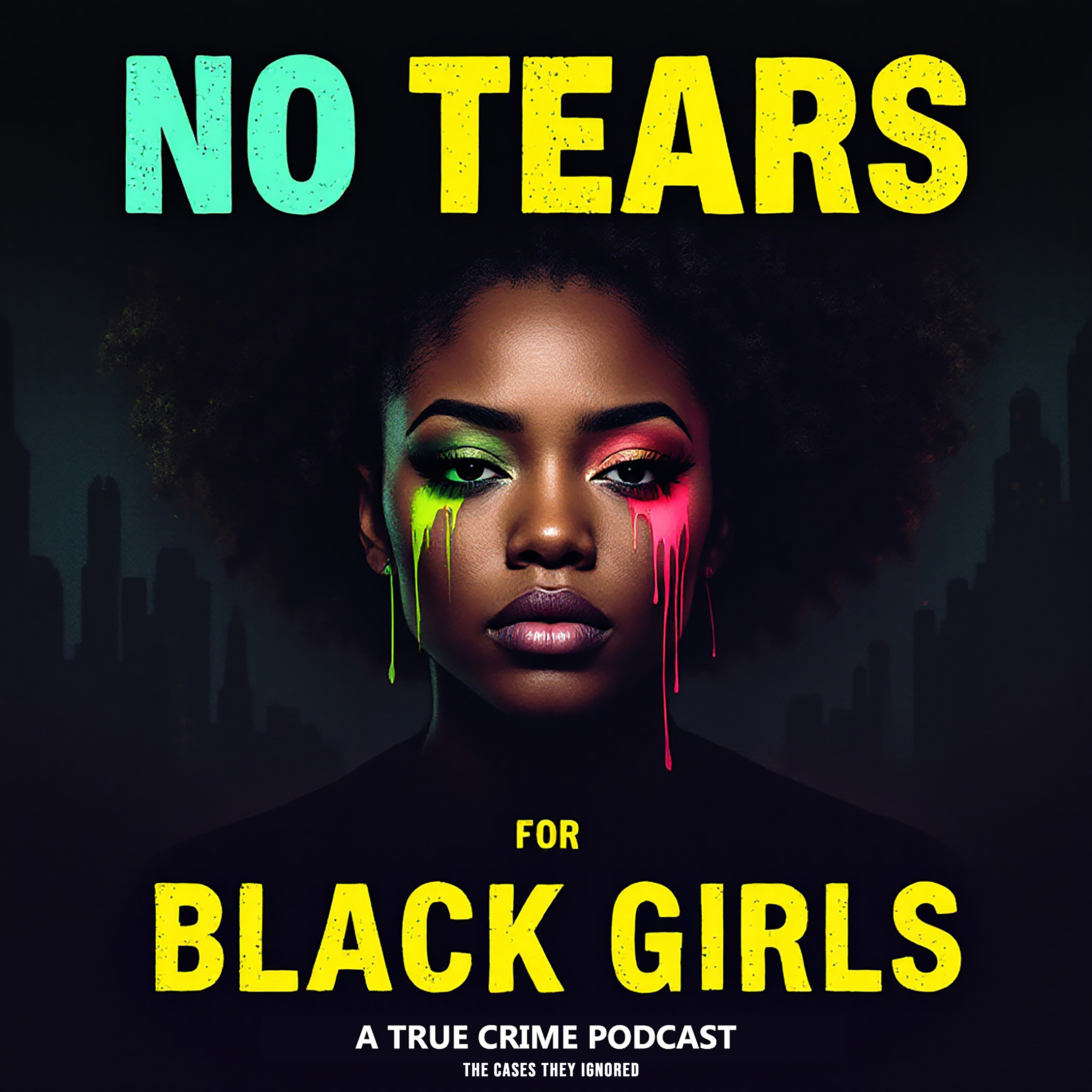
She Said She Was Scared at 2 AM. By 11:46 AM, Hannah Toby-Dean Was Dead.
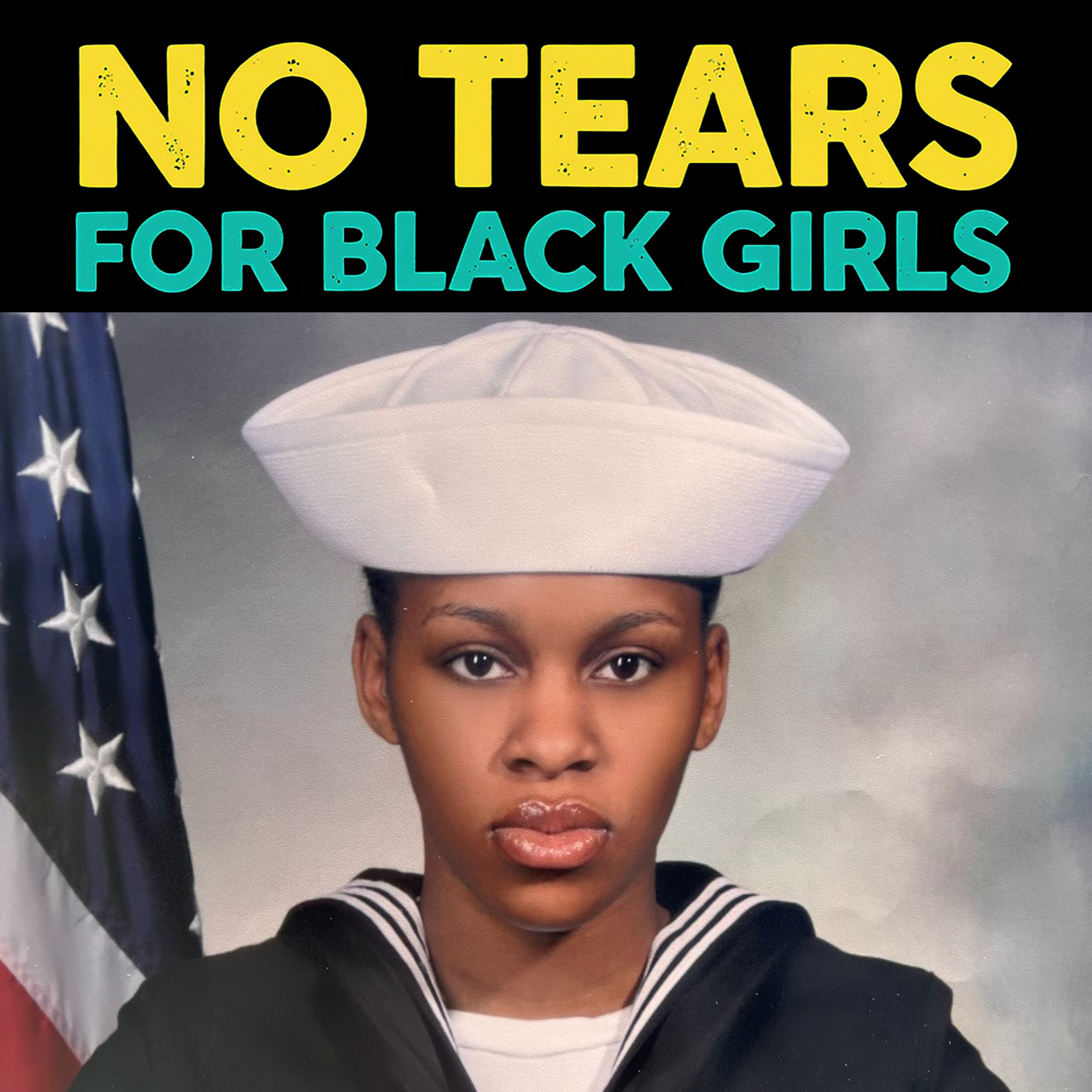
Hannah “Khadija” Toby-Dean was 25 years old. A Navy veteran. A Muslim woman. A rapper known as Hannah Bandz. On June 13, 2025, she told a family member she was afraid for her safety. Less than ten hours later, her mother got the call that Hannah was dead. Then came the details that made the case even harder to ignore: a disabled GPS tracker, an empty suitcase, and credit cards hidden under a spare tire.
In this episode of No Tears For Black Girls: The Cases They Ignored, Samantha Paul walks through the documented timeline, the family’s account, and the questions the Greenville Police Department still has not answered.
This is Black true crime rooted in Black women stories the system too often leaves behind.
If this episode stayed with you, continue the journey with Death Apnea by J.C. Reedburg, a haunting No Tears For Black Girls: Case Files novel about institutional erasure, Black bodies, and the systems that look the other way.
https://www.amazon.com/dp/B0GSP5845P
#JUSTICEFORHANNAH #JUSTICEFORHANNAHBANDZ
#greenvillenc #GreenvillePoliceDepartment
SHOW NOTES
In this episode, Samantha Paul examines the death of Hannah “Khadija” Toby-Dean, a 25-year-old Navy veteran, Muslim woman, and rapper known as Hannah Bandz. Using the family’s documented timeline and publicly available context, this episode walks through Hannah’s final days, the unanswered questions surrounding her death, and the disturbing details that continue to raise concern.
Topics discussed include Hannah’s final calls to family, the delayed and limited public answers in the case, the returned vehicle with a disabled GPS tracker, the empty suitcase, and the credit cards found hidden beneath the spare tire. The episode also examines the broader pattern of how Black women’s stories are too often minimized, delayed, or ignored.
This case remains open.
If this episode moved you, please share it, leave a five-star review, and help keep Hannah’s name in rooms it has not reached yet.
Read next:
Death Apnea by J.C. Reedburg
https://www.amazon.com/dp/B0GSP5845P
Follow and support:
No Tears For Black Girls: The Cases They Ignored
Justice for Hannah Bandz campaign on social media
CREDITS:
Created, Written, & Produced by John Reedburg
Hosted & Narrated by Samantha Paul
Production Company: John Reedburg Media
SOCIAL MEDIA LINKS:
https://www.youtube.com/@NoTearsForBlacksGirls
facebook.com/notearsforblackgirls
instagram.com/notearsforblackgirls
tiktok.com/@notearsforblackgirls
0:00 Imagine this. You are 25 years old, and you have already done more than most people twice your age. You joined the United States Navy. You served aboard the USS Nimitz. You were one of the top students in a school, the Navy's technical training program, where sailors learn the job they will do in service. Your instructor remembered you not because you demanded to be remembered, but because you were the kind of person who left an impression without trying. You came home from serving your country with your whole life still in front of you. You had a name, The Streets New You by Hannah Bands. You had a style that turned heads. You had a voice that could fill a room. You had a mother who loved you so completely that she could tell you the exact time of every phone call, every text message, every moment she knew where you were in the days before everything changed.
0:56 You had thirteen siblings. You had a faith you chose deliberately. In May of 2021, you took your shahada, the declaration of faith that marks a person's entry into Islam. You embraced Islam on your own terms, and you were given the name Khadijah, a name that means something, a name that belongs to one of the most powerful women in Islamic history. You wore it with intention. You were 5 feet tall and carried the presence of a giant. You were 25 years old, a veteran, a Muslim woman, a rapper, a daughter, a sister, a believer, and you had come home with more life ahead of you than anyone around you could have imagined. On June 10th, 2025, your mother saw you for the last time. You were in the company of a man named Sean Causey. Your mother watched you leave.
1:52 She did not know yet that she was already counting down to the last time she would hear your voice. This is no tears for black girls. The cases they ignored. I am Samantha Paul, Before we go any further, I need you to understand what kind of story this is. This is not a cold case from another era. This is not a story that has been fully prosecuted, sentenced and put away. This is a story that is still open. The investigation is still active. The questions Hannah's family has been asking since June 13th, 2025 have not been answered publicly by the Greenville Police Department. No charges directly tied to Hannah's death have been publicly confirmed as of this recording. What you are about to hear is a documented timeline provided by her family, supported by the public record that exists, and told because the family of Hannah Khadija Toby Dean asked for her story to be told.
2:50 Her mother, Charlie Dean, gave her blessing for this episode to run. This story is being told with their knowledge and their trust, and it will be told with the seriousness and care that Hannah's life deserves. This episode contains discussion of suspicious death, potential foul play, possible concealment of evidence, and systemic investigative failure. Take care of yourself while you listen, but listen because Hannah's name deserves to be in more rooms than it currently is, and the people who should be answering questions about what happened to her have been very, very quiet. Hannah Khadija Toby Dean was from Willingboro, NJ, a Township in Burlington County with more history than many people outside the region know.
3:41 Willingboro was originally built in the 1950s as a plan suburban community called Levittown, one of the post war developments that symbolize the American Dream while quietly restricting who was allowed full access to it. Over time, after white flight and racist housing practices pushed Black families out of other communities and into this one, Willingboro became one of the most prominent majority black suburban communities in New Jersey. It became a place where Black families built homes, stability, memory, and legacy across generations. That is where Hannah came from. She came from a place where people show up for each other. And when Hannah died, that community did exactly that. A candlelight memorial was held on June 26th, 2025 at the Burlington Riverfront.
4:35 The following morning, a celebration of life brought people together from across the years of Hannah's life. Her fellow veterans showed up. Members of the fitness and military community she was connected to showed up. Her kindergarten teacher left a tribute. People who had not seen her in years came to say goodbye to a woman who had left an impression on every room she ever walked into. In Greenville, NC, where Hannah had traveled and where she died. The investigation into how she died had already slowed before her community in New Jersey had even finished mourning her. Greenville sits in Pitt County in the eastern part of North Carolina.
5:16 It is home to East Carolina University. It is a mid sized city with a Police Department and public institutions that cannot credibly point to a lack of resources as the reason a case did not move with urgency. It is the kind of place where things are supposed to work. But eastern North Carolina also has a history Black families know too well. About 40 minutes from Greenville in Edgecombe County, the region lived through what became known as the Seven Bridges Rd. killings, a series of murders in which Black women were found dead over a span of years. While law enforcement was slow to fully confront what was happening, a man was ultimately convicted of 1 murder, while the families of the other women were left with what?
6:03 Families of black women in this country are too often left with partial answers, incomplete justice, and the sickening feeling that if the victims had looked different, the response might have too. That history matters here, not because Hannah's case is the same case, but because it happened in the same region and inside the same broader culture of neglect. That pattern shows up in other ways, too. In 2022, local reporting on traffic stop data in eastern North Carolina found that Black people in Greenville were being searched during traffic stops at rates that did not match their share of the local population.
6:44 Public police accountability data has also shown sharp racial disparities in low level arrests. Community groups in Greenville spent years pushing the city to acknowledge the gap between how Black residents and white residents experience law enforcement. And then in June of 2025, the same month Hannah died in Greenville, the city's Racial Equity and Economic Mobility Commission, created to address those disparities, disbanded. This is the city where Hannah died. This is the Police Department that was supposed to find out what happened to her. Here is the timeline as Hannah's family has documented it. On June 10th, 2025, Hannah's mother saw her daughter for the last time.
7:32 Hannah was in the company of Sean Causey. She left on June 11th at 5:30 in the morning. Hannah contacted her mother and said she had arrived safely in Greenville, NC. Her mother noted the time. She always noted the time that is what mothers do when love has made them attentive in ways the world often underestimates. On June 12th, at 4:00 in the afternoon, Hannah called her mother again. She said she was preparing dinner. At that time, she was at the residence of a woman named Vanessa Barber in Greenville. This was the last time Hannah's mother heard her daughter's voice in a normal conversation. The last time she got to tell herself everything was fine, the last 4:00 PM that would ever feel ordinary. Then June 13th came.
8:23 At approximately 2:00 in the morning. Hannah spoke with a family member and expressed fear for her safety. Not discomfort, not uncertainty. Fear. A documented communication in the early hours of the morning from a young woman telling family that she was scared. At 11:46 that same morning, less than 10 hours later, the Willingboro Police Department notified Charlie Dean that her daughter had been pronounced dead. 9 hours and 46 minutes. That is the distance between Hannah telling family she was afraid and Hannah's mother getting the call that her daughter was gone. When police notified Charlie Dean, they also gave her Shawn Causey's phone number. So Hannah's mother did what mothers do when the world stops making sense.
9:12 She started calling people, she called Shawn Causey, she called Vanessa Barber. According to the family's account, Shawn Causey's response to the mother of the woman who had just died was not sorrow, not explanation, not help. It was a warning repeated more than once. Do not blame me, do not blame me, do not blame me. Vanessa Barber told Charlie Dean that she and Shawn Causey were cousins. It was later discovered that they also share a child together. They were not simply distant relatives passing through the same story. Their lives were tied together and Hannah died inside that world.
9:54 Then came what happened next. On June 24th, 11 days after Hannah was pronounced dead, her vehicle was returned to the family. The GPS tracker had been deliberately disabled. Her suitcase was returned too. When the family opened it, it was empty. The belongings Hannah had travelled with were gone. Her credit cards were later found in the trunk of her car, hidden beneath the spare tire. A disabled GPS tracker. An empty suitcase. Credit cards concealed under a spare tire. Those are not the kinds of details that calm a case down. Those are the kinds of details that demand deeper scrutiny. The family brought those concerns to law enforcement, but according to the family, the initial investigation moved slowly.
10:44 One of the explanations that surfaced was that Vanessa Barber had described Hannah as her God sister, and that claim appears to have shaped how seriously the situation was initially approached. A word like family was allowed to soften a set of facts that should have done the opposite. Because if a woman is found dead after saying she is afraid and her GPS is disabled and her belongings are missing and her financial items are hidden in her own trunk, then we were like, family is not a reason to relax. It is a reason to ask harder questions. Instead, Hannah's family was left watching the investigation stall in real time. Then, on August 1st, 2025, a family member did the work the police should have already been doing. They gathered evidence and submitted it directly to the Greenville Police Department.
11:35 After that, the investigation was reopened. As of this recording, the Greenville Police Department has made no public statement confirming arrests directly tied to Hannah's death. The official cause of death has not been publicly released. The family is still waiting for answers. The system has not yet chosen to provide. And here is what we know. A 25 year Old Navy veteran traveled to Greenville, NC in the company of a man. She called her mother to say she had arrived safely. She called again the next day and said she was making dinner. In the early hours of the following morning. She told a family member she was afraid. Less than 10 hours later, she was dead. Her GPS tracker had been disabled. Her belongings were missing.
12:26 Her credit cards were hidden in her trunk. The initial investigation appears to have slowed under explanations that should have triggered more urgency, not less. And the family had to bring forward their own evidence to get the case reopened. Now I need to speak directly to you, Hannah Khadijah. Toby Dean served this country. She put on a uniform. She served aboard a United States Navy vessel. She came home with an honorable record and with people who remembered her as somebody exceptional. She chose her faith. She carried a new name with intention. She was a veteran. She was a Muslim woman. She was a rapper.
13:08 She was somebody's daughter and somebody's sister and somebody's friend and somebody's student and somebody who's absent still has weight in every room her family walks into. She was 25 years old. She called her mother to say she got there safely. She called again to say she was making dinner. Then she called in the dark because she was afraid. That is who this story is about. And the reason this story matters is not only because one family is still waiting for answers. It matters because too many black families know this shape by heart. The waiting, the silence, the sense that if they do not push, nothing moves. The feeling that they are being asked to prove the value of a life that should have been protected on site.
13:53 That is why the regional context matters. That is why Greenville matters. That is why Eastern North Carolina matters. Because Hannah did not die in a vacuum. She died in a place with a documented history of racial disparity in policing, in a region where black women's deaths have too often been answered slowly, partially, or not at all. Hannah's case is still open. That means the people responsible for what happened to her have not been held publicly accountable as of this recording. It means the Greenville Police Department still owes this family answers. It means Charlie Dean is still living inside a question no mother should have to carry for this long. We are watching, her family is watching, and Hannah's name is not going anywhere.
14:44 If you know anything about what happened to Hannah Khadija Toby Dean in Greenville, NC between June 10th and June 13th, 2025, contact the Greenville Police Department directly. The family has been fighting for answers since the morning they got that call. If you have information that can move this case forward, now is the time to use it. Follow the Justice for Hannah Ban's campaign on Instagram and TikTok. Share this episode put Hannah's name in rooms it has not been in yet. Every share increases pressure. Every new listener is another person who now knows this case is still open and a mother is still waiting. Before I let you go, I want to point you toward two things that come from the same commitment this episode comes from. The first is Flowers for the Living, the latest EP from the No Tears for Black Girls soundtrack, performed by Jada Truth.
15:41 It is for the women still here, for the ones still carrying weight the world pretended not to see, for the mothers still waiting for answers, for the sisters still saying her name out loud in rooms that would rather forget. Search No Tears for Black Girls soundtrack wherever you stream music and it will be there. The second is Death Apnea by JC Reedberg, part of the No Tears for Black Girls Case Files series. If what you heard today about institutional erasure, black women and systems that look the other way landed somewhere heavy in your chest, death apnea is where that same weight lives. In fiction, 19 year old Kiki Toussaint's mother dies on New Year's Eve and is processed by a New Orleans hospital as Jane Doe 2026-001, despite having identification in her purse, despite Kiki calling every hospital in the city, despite a family doing everything right.
16:41 What Kiki and investigative journalist Samantha Paul uncover is not a mistake. It is a pipeline, and it has been learning better paperwork for over a century. If this episode moves something in you, please share it. Leave a five star review wherever you listen. Every review helps the algorithm push these stories to more people. More reviews mean more families get heard, more stories get told, and more black women stop being treated like footnotes in cases that should have begun with their names. This is no tears for Black girls, the cases they ignored. I am Samantha Paul, stay loved, stay safe, and remember whenever you are trapped in a World of Darkness, never allow fear to overwhelm you.
17:29 Believe in your inner spirit and remind yourself of God's first words. Let there be light.