
 Apple Podcasts

 Spotify

 RSS Feed

 Amazon Music

 Audible

 iHeartRadio

 YouTube

 Podcast Addict

 PlayerFM

 Deezer

 Pandora

 TuneIn

 Podchaser
VANISHED IN PLAIN SIGHT: The Shocking Truth About Unclaimed Bodies

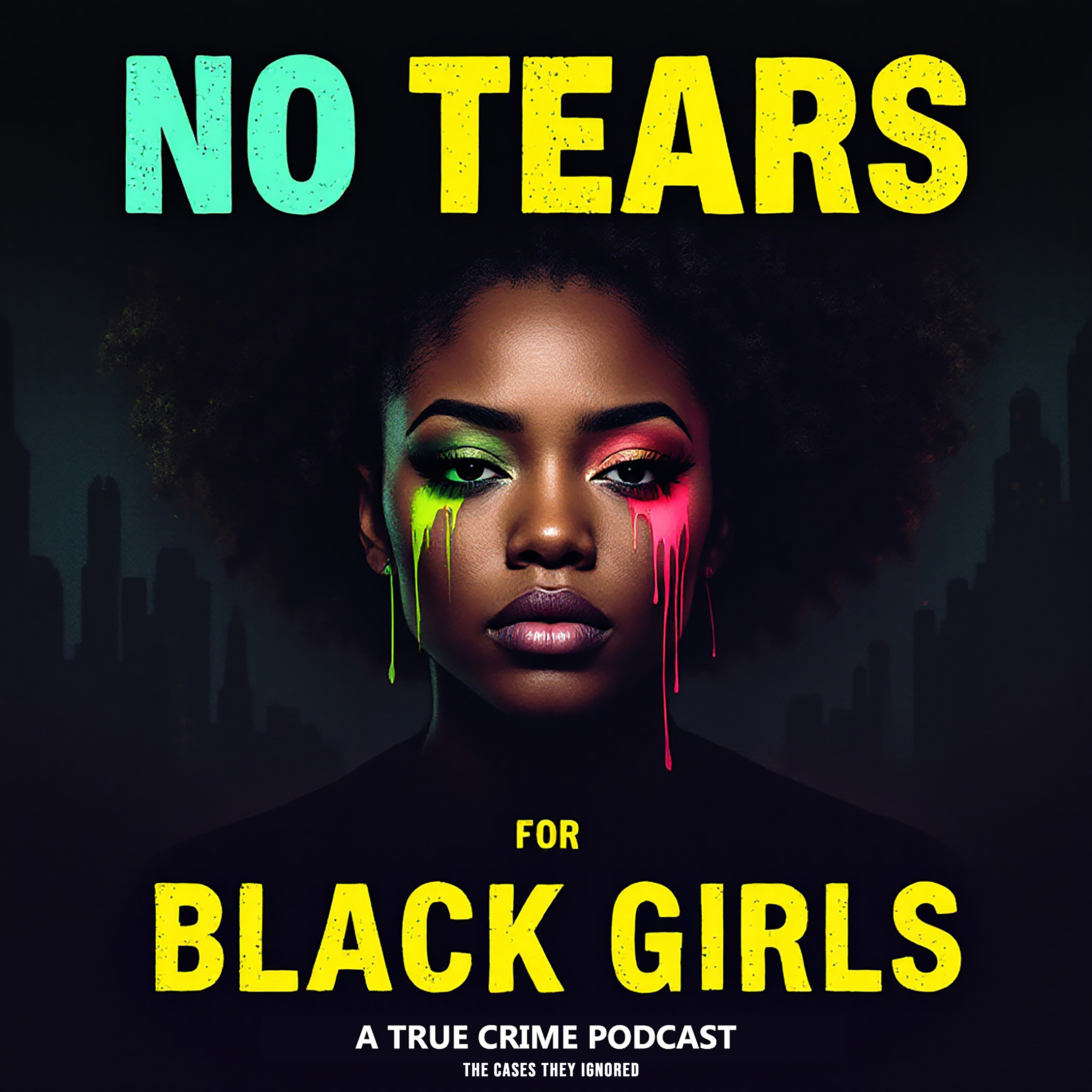
Tonya Walker, a 51-year-old Black mother, vanished in Sacramento on November 2, 2023. Her family searched for seven months to learn her body lay unclaimed at Mercy Hospital, where she’d died of cardiac arrest. The hospital delayed her death certificate by five months and stored her at an off-site morgue that allegedly harvested her organs without consent. Similar cases of missing Black bodies have emerged, fueling accusations of systemic neglect, organ trafficking, and medical racism.
CREDITS:
Created, Written, & Produced by John Reedburg
Hosted & Narrated by Samantha Paul
Production Company: John Reedburg Media
SOCIAL MEDIA LINKS:
https://www.youtube.com/@NoTearsForBlacksGirls
facebook.com/notearsforblackgirls
instagram.com/notearsforblackgirls
tiktok.com/@notearsforblackgirls
0:02 No tears for black girls when they disappear. No tears for black girls like they were never here. But we remember. We'll speak their names. Welcome back to No Tears for Black Girls. I'm your host, Samantha Paul. Today we're diving deep into a story that will shake you to your core. A story about a 51 year old black mother named Tanya Walker who vanished without a trace in Sacramento, CA. For seven agonizing months, her family searched everywhere.
0:42 They dug through ditches, crawled through drains, followed every lead, no matter how heartbreaking. But Tanya wasn't missing. She was dead. And her body was sitting in a warehouse morgue while her family suffered, while detectives wasted resources, while scammers preyed on their desperation with fake ransom demands. This isn't just about one family's nightmare. This is about a pattern, a system, and the uncomfortable questions we need to ask about what happens to black bodies when they die in America's hospitals. November 2nd, 2023. Tanya Walker, the oldest of 13 children, stops returning calls from her family at 51. She was a mother of four, 2 girls, 2 boys. She'd been struggling with homelessness, but she always stayed in touch.
1:36 Always. Her sister Kalia tells us she's never missed a holiday. She was there every holiday. So when Thanksgiving came and Tanya didn't show up, they knew something was really, really wrong. November 10th, 8 days after Tanya's last contact, the family reports her missing to Sacramento County Sheriff's Office. What they didn't know was that Tanya had already been dead for eight days. The search begins. Flyers distributed across Sacramento, social media campaigns on TikTok, Facebook, every platform they could find. The family offers a $3500 reward, which immediately attracts predators.
2:20 Scammers send manipulated photos of Tanya in body bags demanding Cash App payments. One message claims she's being held for ransom. Her sister Delee remembers the false leads. She's over here, she's buried over there. They overdosed her or they beat her up real bad and put her somewhere. We kept saying here's another site. We'd show them the text or the e-mail and they'd meet us out there. We would dig it up and she wouldn't be there. For seven months, this family lived in hell. Not knowing is the hardest thing, they said, but the truth was even worse. May 31st, 2024, seven months after Tanya disappeared, a Sacramento County detective calls the family with news that should have brought relief. They found her, but relief quickly turned to horror. Tanya Walker had died on November 2nd, 2023, the exact day she stopped answering calls at Dignity Health's Mercy General Hospital.
3:24 She suffered cardiac arrest, dying from hypothermia and hypotension. The hospital knew she was dead. They had her body, but they never issued a death certificate until April 15th, 2024, five months later. They never called her family. Instead, they stored her body at an off site morgue called Cremations Only, officially known as Mortuary Support Services of Northern California, owned by Michael Robert Lofton. When Tanya's sisters finally arrived to identify her body, they were warned not to look. The morgue staff tried to convince them not to go in, but after seven months of searching, they weren't leaving without seeing their sister. What they found will haunt them forever. Daley describes the scene.
4:14 We identified her through the tattoo on her arm. Her body was in the worst condition you can imagine. Her face looked like someone put battery acid all on her face. But it gets worse. According to the lawsuit filed by the family, Tanya's eyes and skin had been surgically removed. The hospital had allegedly harvested her organs without consent, even though she was never registered as an organ donor. Kalia asked the question that cuts to the heart of this case. They said she died of hypothermia. Then why did she look like she'd been eaten by wolves? Tanya Walker wasn't alone. As investigators dug deeper, a horrifying pattern emerged at Dignity Health hospitals across Sacramento. Jesse Peterson, 31 years old, died April 2023 at Mercy San Juan Medical Center.
5:09 Her family was told she left against medical advice. They searched for a year before learning she'd been dead the entire time, her body so decomposed that an open casket funeral was impossible. Michael Gray died of an overdose in 2021 at Mercy San Juan Hospital claimed they called the wrong number to notify his mother. She searched for a month before finding his decomposed remains. California Department of Public Health investigations revealed the scope 61 bodies stored at the off site morgue without proper documentation. Some bodies stored for one to two years without death certificates.
5:50 The hospital president told regulators we assume the remains being stored did not have families. Let that sink in. They assumed Black and brown bodies didn't have families who cared. On TikTok and across social media, Black communities have been connecting dots that mainstream media ignores. The hashtags tell the story. Tanya Walker, Jesse Peterson. Black bodies matter. TikTok users are asking the hard questions. Why are so many missing Black people found dead with organs removed? Why do these cases follow similar patterns? Why is this happening disproportionately to Black and brown bodies? Some theories circulating online include the organ harvesting theory that hospitals are deliberately targeting vulnerable black patients, homeless, uninsured, estranged from family for organ harvesting operations. The fact that Tanya's organs were removed despite her never consenting to donation fuels this theory. The medical racism theory that this represents a continuation of historical medical experimentation on black bodies from the Tuskegee experiments to Henrietta Lacks now evolved into modern organ trafficking.
7:07 The disposal theory that hospitals are treating black bodies as disposable, assuming no one will come looking, no one will ask questions, no one will demand accountability. The most chilling theory gaining traction is the missing persons pipeline, the idea that vulnerable Black people are being targeted because their disappearances won't generate media attention or intensive police investigations. To understand why these conspiracy theories resonate so deeply in Black communities, we need to examine history. 1968 Richmond, VA Bruce Tucker, a 54 year old black laborer, falls and suffers A fatal head injury. The next day his heart is transplanted into a white business executive without family consent. The family only learns about it when the Funeral Home tells them the body is missing organs. 1932 to 1972, Tuskegee, Alabama. the US government conducts a 40 year study withholding syphilis treatment from black men, telling them they have bad blood. 1951 Baltimore Henrietta Lacks cells are harvested without consent and used for decades of medical research, generating billions in profits while her family remains in poverty.
8:32 Present day studies show black patients receive less pain medication, are less likely to be referred to specialists, and face higher maternal mortality rates. Medical students still believe myths about Black people having thicker skin or higher pain tolerance. This is an ancient history. This is the foundation of medical mistrust. That makes cases like Tanya Walker's feel like a continuation, not an aberration. Here's what's telling. I searched extensively for similar cases involving white patients. While medical errors and delayed death certificates occur across all demographics, the pattern we see in Sacramento?
9:13 Multiple families, Extended searches, decomposed bodies, missing organs. This pattern is overwhelmingly affecting Black and brown families. When white people go missing, we get Amber alerts, national media coverage, and massive search efforts. When white patients die in hospitals, families are notified immediately, death certificates are processed on time, and bodies are treated with dignity. The contrast is stark and undeniable. This isn't about individual bad actors. This is about systemic devaluation of Black lives, even in death. While we fight for systemic change, our community needs to protect itself. Here's what TikTok sleuths and community advocates are recommending.
10:00 Emergency contact redundancy. Don't rely on one emergency contact. Give hospitals multiple family members information. Make sure they have current phone numbers. Hospital advocacy. Never let a family member go to the hospital alone. If possible, have someone present who can ask questions and demand answers. Documentation Keep records of hospital visits. Get copies of all medical documents. Take photos if necessary. Legal preparation. Consider advance directives that explicitly state your wishes about organ donation and body handling. Community Networks Create group chats and social media networks to quickly spread word when someone goes missing. Don't wait for police, start searching immediately. Media pressure Use social media to amplify missing persons cases.
10:53 Tag local news, create hashtags, make noise. The squeaky wheel gets attention. Know your rights. Families have the right to see bodies, to get death certificates within 8 days, to be notified immediately of death. Don't let hospitals tell you otherwise. After examining all the evidence, social media theories and expert analysis, what scenario makes the most sense? The TikTok sleuths are on to something. But it's not a grand conspiracy. It's something more insidious, systematic negligence rooted in racial bias. Here's what likely happened. Dignity Health hospitals developed a culture where Black and brown patients were seen as less important. When these patients died, staff assumed no one would come looking.
11:44 They cut corners on death certificates, delayed family notifications and warehoused bodies at off site morgues. The organ harvesting appears opportunistic rather than planned, taking advantage of bodies they assumed were unclaimed to meet organ donation quotas or research needs. This isn't a conspiracy. It's worse. It's a system so steeped in racial bias that Black Death becomes invisible, Black families become irrelevant, and Black bodies become commodities. Despite multiple lawsuits, media investigations and state health department findings, Dignity Health continues operating with minimal consequences.
12:25 No executives have been fired. No criminal charges have been filed. The Sacramento County DA may be investigating, but they won't confirm it. The California Department of Public Health has known about these issues since 2022 but has taken no enforcement action. They keep declaring the hospitals in compliance after each violation. This is how institutional racism works in 2024, Not through burning crosses or explicit hatred, but through bureaucratic indifference, regulatory capture, and the quiet assumption that Black lives and Black deaths simply matter less. Tanya Walker was more than a victim. She was a daughter, sister, mother. She was loved.
13:12 She mattered. Her family's seven month nightmare should never have happened. But her story has awakened something. Black communities across social media are paying attention, asking questions, demanding answers. The hashtag Justice for Tanya is spreading. Other families are coming forward with similar stories. Tanya's sisters, Daley and Kalia, are fighting for change. Their lawsuit isn't just about money. It's about accountability. It's about ensuring no other family endures what they endured. As Daley said, that's all I would hope for is change. This case embodies everything our podcast stands for.
13:53 Black women and their families deserve dignity in life and death. They deserve to be seen, heard, and valued. They deserve justice. The system failed Tanya Walker catastrophically, but her story is now a rallying cry, a reminder that we must protect each other because the system won't protect us. To Tanya's family, we see you, we hear you. Your sister's life mattered and her death will not be in vain. To our listeners, stay vigilant, stay connected, keep asking questions, keep demanding answers, because when we stop caring about each other, when we stop fighting for each other, that's when they win. Up next is the latest song Safe Place by our music group No Tears for Black Girls, featuring Jada Truth. Stay loved, stay blessed and stay safe. Thank you for listening to No Tears for Black Girls. This is Samantha Paul.
15:02 Everybody needs a safe place, y'all feel me? Oh, let's just through the rain. We got room for your pain. Oh, yo-yo, come inside. No need to hide. Found family. Love remain. Yo. Where my safe place at? Right here. Don't you let go.
15:42 Come back. I'm near. When the world go cold, You know I care.
16:28 One of your own ones. A place in the song. No more feeling alone. The battle bounce with me. Lift up the broken and lost bounce. Raise the by the rhythm. No matter the cost, no matter what, let the sun paint your face and leave your trouble at the door. Every heartbreak has a place. Got a place right here. That's what we'd for Where my safe place right here. Don't you let go, come back. I'm near. When the world goes cold. You know I care. Everybody needs us. Say right here. Don't you let go.
17:09 Come back. I'm near. When the world goes cold. You know I care. Everybody needs. I was lost outside Now these doors swing wide. Sanctuary in the song. Watch the darkness divide. Watch her voices that doubt.
17:54 Let's go. Let's go. Go, go. Go where? My safe place Right here. Don't you let go. Come back. I'm near. When the world go cold. You know I can't. Everybody needs a safe place right here. Don't you let go. Come back. I'm near. When the world go cold. You know I can't. Everybody needs a safe place.