
 Apple Podcasts

 Spotify

 RSS Feed

 Amazon Music

 Audible

 iHeartRadio

 YouTube

 Podcast Addict

 PlayerFM

 Deezer

 Pandora

 TuneIn

 Podchaser
Vanished in Atlanta: The Stories the City Tried to Bury

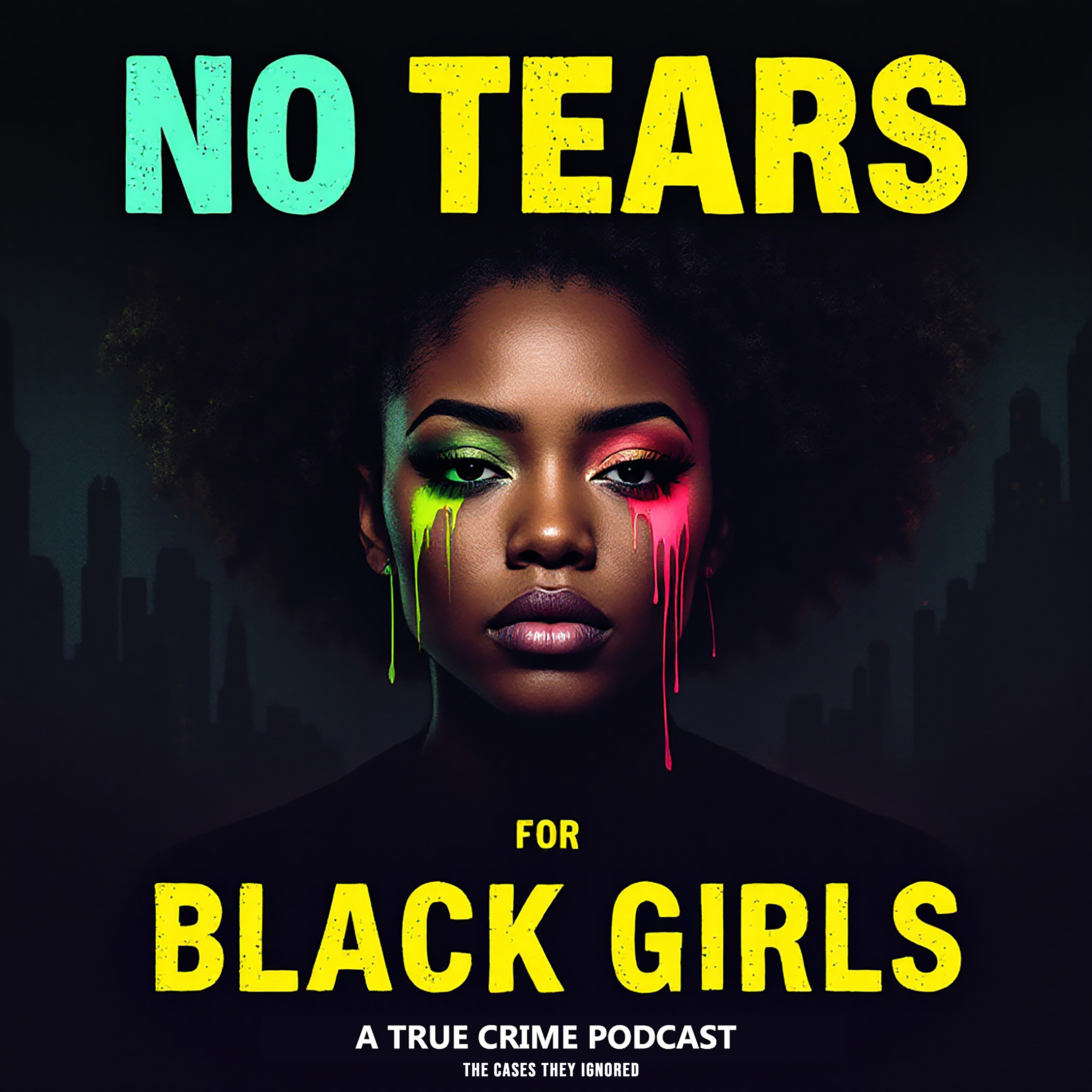
When Black women and girls go missing in Atlanta, their stories too often vanish with them. In this gripping episode of No Tears For Black Girls, we uncover the haunting cases of Destiney Gunnison, Bridget Shiel, and Jokisha Brown—three lives lost or missing in the city’s shadows.
Through family voices, chilling details, and hard truths about systemic neglect, we reveal why so many cases remain unsolved and unheard. Join us as we demand justice, remembrance, and a future where silence never wins.
CREDITS:
Created, Written, & Produced by John Reedburg
Hosted & Narrated by Samantha Paul
Production Company: John Reedburg Media
SOCIAL MEDIA LINKS:
https://www.youtube.com/@NoTearsForBlacksGirls
facebook.com/notearsforblackgirls
instagram.com/notearsforblackgirls
tiktok.com/@notearsforblackgirls
0:01 No tears for black girls when they disappear. No tears for black girls like they were never here. But we remember. We'll speak their names, their stories matter. We'll break these chains. No tears left to cry. Today, we travel. The twilight margins of Atlanta, searching for the names, faces and stories. The city. Would rather forget stories that flicker briefly. Through the news ticker, then disappear. A missing woman, a murdered daughter, a mother's grief echoing unanswered through empty streets.
0:45 In Atlanta, as in so many cities, the numbers are staggering and the silence deafening. According to the Black and Missing Foundation, more than 64,000 Black women and girls are currently missing across the United. States their cases. Are more likely to go unsolved or unreported, less likely to be covered by media and too often dismissed by law enforcement. In Georgia and Atlanta in particular, the problem is acute. Black women account for a disproportionate percentage of missing persons cases, and their families are left to fight for answers alone. Let's start in the present, with a family still waiting for answers. Destiny Gunnison is. 30 years old. And like so many Black women, her life has been shaped by both vulnerability and resilience.
1:36 Destiny. Lives with disabilities. Cognitive and medical conditions that require assistance. She's soft spoken, shy in crowds and fiercely. Attached to those she trusts. In May of 2024, Destiny was last seen leaving her father's home in East Point A. Suburb just outside. Atlanta, just another day, a routine walk, a visit to a friend. She never came back. For Destiny's family, the anxiety and fear began the moment she didn't return. Her parents and siblings called everyone they knew, organized search parties and posted Flyers at gas stations, laundromats and corner stores. They begged for the city.
2:20 To pay attention, but Destiny's. Story was largely. Ignored by the broader media, her disappearance was. Relegated to the back pages of local. News or quick mentions on neighborhood. Facebook Groups. The days stretched into. Weeks, police issued. A missing person alert describing her as endangered because of her health concerns. But the urgency never materialized. No Amber Alert, no citywide canvas. The community rallied, but their efforts were piece meal, some volunteers, some church groups, a few neighbors who remembered seeing Destiny at the bus stop. But most people were too busy, too numb or too far removed. Destiny's case is not unique.
3:04 In Atlanta, an estimated 40% of all missing persons cases involve Black women and girls, according to Community. Advocates, yet you're far less likely to see their. Faces on the news. Far less likely to hear a police. Chief at the podium asking for help. The National Crime Information Center estimates that in 2023 alone, over 14,000 black women and girls were reported missing in Georgia, with Atlanta at the center of the. Crisis. But those are just the reported cases for every. Destiny Gunnison. There are untold others whose families? Lack the resources. The language. Or the legal. Status to demand a formal investigation.
3:45 Cases that never make it. To a database. Let alone the public's eye. That is the reality. Of Atlanta, a city shining bright but haunted at its. Edges by ghosts. No one is willing to name and so Destiny's family. Waits every. Time the phone rings Hope and. Dread rise together. Every time a new story. Pushes hers off the feed. They tape the. Flyers back up. And whisper prayers into the night. Months have passed. As of December 2024, Destiny Gunnison is still missing her. Mother told reporters. My daughter would never just disappear. She needs help. She needs to be seen.
4:29 But the city? Keeps moving and her. Story slips deeper. Into the shadows, that silence is a violence all its own. Before destiny, there was Bridget Shield, a name barely spoken now outside her family's grieving circle. But once she lit up Atlanta's possibilities, Bridget was only 19. Raised by her grandmother, Beverly Toole, she was ambitious and creative, pouring herself into music and modeling, planning photo shoots with friends on weekends, scribbling song lyrics on the backs of napkins and receipts. People talk about her laugh first. How it? Would fill a room, chase away whatever heaviness you brought to.
5:11 Her door. She wanted to make it, to be seen to turn her gifts into something bigger than herself. But even for the Dreamers, the city's dangers are real. May 30th, 2016 was a balmy night laced with the scent of honeysuckle and car. Exhaust, Bridget told. Her grandmother. She'd be back soon. Just a quick trip. Nothing to worry about, Atlanta's. Streets are always. Alive at night, humming with music and possibility, but also with the dangers that black women are taught to sense. To avoid. To never ignore surveillance cameras later caught. Bridget at a. DeKalb County gas station buying a Sprite.
5:53 She wasn't alone. Two men flanked her, one at her shoulder, another by the car. In the grainy footage, she looks. Closed off. Her face tense, body language wary. She wasn't driving her own. Car hours later, Bridget. 'S car was seen heading into Oakland City Park in southwest Atlanta around midnight. Gunfire. Shattered the quiet. Someone called 911, but the responding officers found nothing out of place. Maybe they didn't look hard enough, or maybe they didn't want to see. When the sun rose on May 31st, a jogger passing through the park stumbled on a horror.
6:34 Bridget's naked body lay in the grass. By the basketball court, riddled with bullets. Her clothes were nearby, her car gone. It was later found abandoned far from the. Park A. Silent witness to a crime no one wanted to claim for her family, the nightmare began all over again. Beverly, who had raised Bridget from a little girl. Was swallowed by grief. And disbelief. The community responded with vigils, marches and prayers. They lit candles, posted Flyers and. Pleaded for justice. Not just for. Bridget. But for all the missing and murdered black women. Whose cases filled? Atlanta's Unsolved Files The pain was immediate, consuming, but the investigation soon lost momentum. At first, detectives collected DNA from the crime scene, interviewed witnesses and scoured camera footage. There was even hope A.
7:34 Sprite bottle with. DNA, fingerprints, Leads. But as time passed, so did the city's attention. Weeks became months. The vigils faded. The posters curled. At the edges and fell away. Why did Bridget? 'S case stagnate. Why, Her grandmother wondered, did it never? Get the resources. That seemed so. Quickly devoted to. Other young women, Other neighborhoods, according to the Black and Missing Foundation. Black women's cases. Are less likely to receive media coverage or. Law enforcement urgency and families are often left to investigate on their own. Statistics paint a grim. Picture nearly 40.
8:15 Percent of all missing persons in Georgia are black women or. Girls, but their stories? Rarely. Lead the Evening News A break finally came, but not from tireless police work on Bridget's behalf. In October of that year, police investigating an unrelated double homicide arrested Christopher Spencer and Vernon Beeman. When Spencer's DNA was entered into the system, it matched evidence collected at Bridget's crime scene. But even this answer. Was elusive. Spencer was already serving a life sentence for the Stone Mountain murders. He denied ever knowing Bridget. He has never been tried or convicted in her case. The second man, the one seen with her on the gas station cameras, was never identified.
9:02 Police say they don't believe Bridget's death was gang related, but they can't explain why she was. Targeted or whether. She was simply in the wrong place with the wrong people at the wrong moment. Today, Bridget's story lingers unresolved, unhealed, a wound in Atlanta's beating heart. And always, the silence for every mother who stands in front of the news cameras. There are sisters. Cousins, friends who mourn in the shadows, forced to grieve without answers. This is the pattern repeated again and again, the silence feeding on itself, swallowing voices that the city never learned to listen for. Joe Keisha Keisha Brown's story is another chilling echo, a chronicle of resilience and terror, love and betrayal. Born in Florida, Keisha moved to Atlanta to chase her dreams as an actress, model and small business owner. She was a loving mother to her teenage son, Jack, a boy whose world revolved around the certainty of his mother's love. Keisha's friends and family describe her as someone with a magnetic smile, a generous heart and an unbreakable. Spirit.
10:18 But her life was marked by a relationship that turned from passion to nightmare. Keisha's ex. Boyfriend Alfredo Capote was not just. Abusive. He was a predator. In April 2016, he broke into Keisha's Duluth home while her son was there, then kidnapped and. Sexually assaulted. Her In a campaign of terror that spanned multiple counties, she finally escaped by leaping from a moving car, flagging down a stranger for help. Court records reveal a history. Of violence, intimidation and psychological torment. Keisha filed restraining orders, worked with police and pleaded for protection.
10:59 Despite the evidence and her compliance, Capote remained free. Friends remember how Keisha confided in them her certainty. That Capote would kill her her. Exhaustion from fighting for her own safety on July 1st, 2016. Just hours before her 36th birthday. Keisha sat in her. Mercedes SUV. Outside a strip mall on North Druid Hills Rd. waiting to go into a studio. For a photo shoot. It was a familiar place and she may have felt a brief moment of peace, but someone was watching. Keisha was ambushed, shot multiple times through the window. Witnesses saw a man running from the scene.
11:40 Atlanta police interviewed bystanders. Reviewed security footage. And quickly named Capote as a person of interest. But he had vanished. For months, Keisha's family and community members waited, organized vigils and demanded action. Keisha's mother, already grieving the loss of another child just months earlier, became a fierce. Advocate for justice, both for her daughter. And for all women trapped in cycles of intimate partner violence. Capote was finally arrested in Louisiana nearly a year later, in April 2017 on unrelated. Charges He was extradited to Georgia to face a list.
12:22 Of felonies, including kidnapping. Rape. Aggravated assault. And more. The legal process has been. Slow stretched on by. Capote's efforts. To delay and challenge the. Case as of. 2022 the family is still waiting for a final measure of. Justice what? Connects destiny, Bridget and Jokisha. Their. Stories are not identical. Each woman's life, each disappearance or murder is unique in its heartbreak and hope. Destiny is still missing. Bridget's killer remains unnamed, her family left with a tissue of half answers and shadows. Jokisha's murderer is known, but her family still waits.
13:04 For the court to deliver justice years. After the crime. But beneath the differences runs a common truth. These were women loved deeply by their families, remembered fiercely by their communities, and all were let down by a system that was. Supposed to protect. Them the silence around their cases is not just neglect, it is a form of violence, a reminder. Of whose lives? Are considered urgent Whose? Grief is prioritized. And whose stories are allowed to linger in the public memory? And what? Of the stats. Black women make up about 13% of the US female population, but represent more than 1/3 of all missing women in the country in Atlanta.
13:48 The crisis is reflected. In every neighborhood, every. Vigil every face. On a flyer. Most experts believe the. True numbers are much higher as so many cases go unreported or are misclassified. For every name we say aloud, there are dozens more whispered in private, mourned in silence. That is why no. Tears for black girls exists. To bring these stories. Out of the shadows to bear. Witness and fight. For a future. Where silence never wins at Queen's Crown Salon, every style comes with a story, and some stories are dangerous to tell. When women start vanishing and the city's most powerful police family closes ranks, salon owner Quanda and her. Circle of stylists refused to stay quiet as secrets. Unravel and danger creeps.
14:40 Closer Tasha Roxy. And their found family must risk everything to protect one another and to. Expose the truth. Behind the Rivers family's legacy of corruption, Detective Vega and. Officer Rodriguez are. Determined to. Break the cycle. But justice in Atlanta comes at a price. For every woman who dares to speak, there's another forced into silence. For every. Survivor, a story the city would rather forget. In a world where silence is survival, breaking it might be the only way to save them all. The. Price of Silence is a gripping, lyrical novel. About sisterhood survival. And the power of community. For the women of Queen's Crown, the fight isn't just. For justice, it's for the right.
15:24 To be seen, heard and free. The novel. Is available for. Free download today on Amazon June 22nd and will be free to download on Amazon Kindle starting June 23rd. Don't miss your chance to experience this story, one that honors the voices and the courage of women like Destiny Gunnison, Bridget Shield, and Jokisha Brown. And as a. Special tribute. The song Atlanta Sees You from the Price of Silence soundtrack will play in its entirety at the end of this episode. Thank you for listening, Stay. Loved, stay blessed. And stay safe.
16:20 These streets hold stories that never make the front page. Another black queen lost just a statistic, just her age. Joe Keisha Brown, model, actress, just 35, shot through the windshield the night before her birthday arrived. April kidnapped. July murder. But where's the outrage? My concrete veins run deep with names that fade from the stage. Dynasty was her name in the Atlanta rap scene, but when she reported her assault, the system failed to intervene. We've been fighting to survive in the world where the pain is. Men of us, Atlanta sees you. Atlanta knows when the cameras turn in the spotlight goes Community's got no immediate fails telling the stories behind the headlines. 51 murders unsolved in a single year Brown hayden's shield 3 Queens disappeared.
17:10 Channel 2 might flash their faces for a moment or two while white victims get updates the whole week. Through my skyline stands witness to this double standard where melanin determines if your death is worth the camera. The same neighborhoods they call dangerous at 11 are filled with mothers creating sanctuaries like heaven. From Oakland City to Vine City, East Point to Decatur, community builds what the headlines won't favor vigils held by street light, names written on balloons. Just as the latest justice denied coming to soon, I watched mothers organ, not search. Parties at dawn, when police resources stretch too thin are simply gone. My billboards should bare their faces, their stories, their names, instead of the luxury cars in the fortune of fame.
17:51 Can you hear? Them calling through the concrete and steel, the voices of my daughters too real to conceal. The prayers at new birth, the rallies at five points. The truth between the headlines that the city snooze be headlines don't. Tell a story the missing pieces the untold glory of black women fighting to survive in the world where the pain is in the bus. Atlanta sees you. Atlanta knows when the camera.
18:34 For Joe Keisha, for Taylor, for Bridget, for all the daughters of Atlanta whose stories still call for justice, for witness, for someone to see that behind every headline, that's humanity.